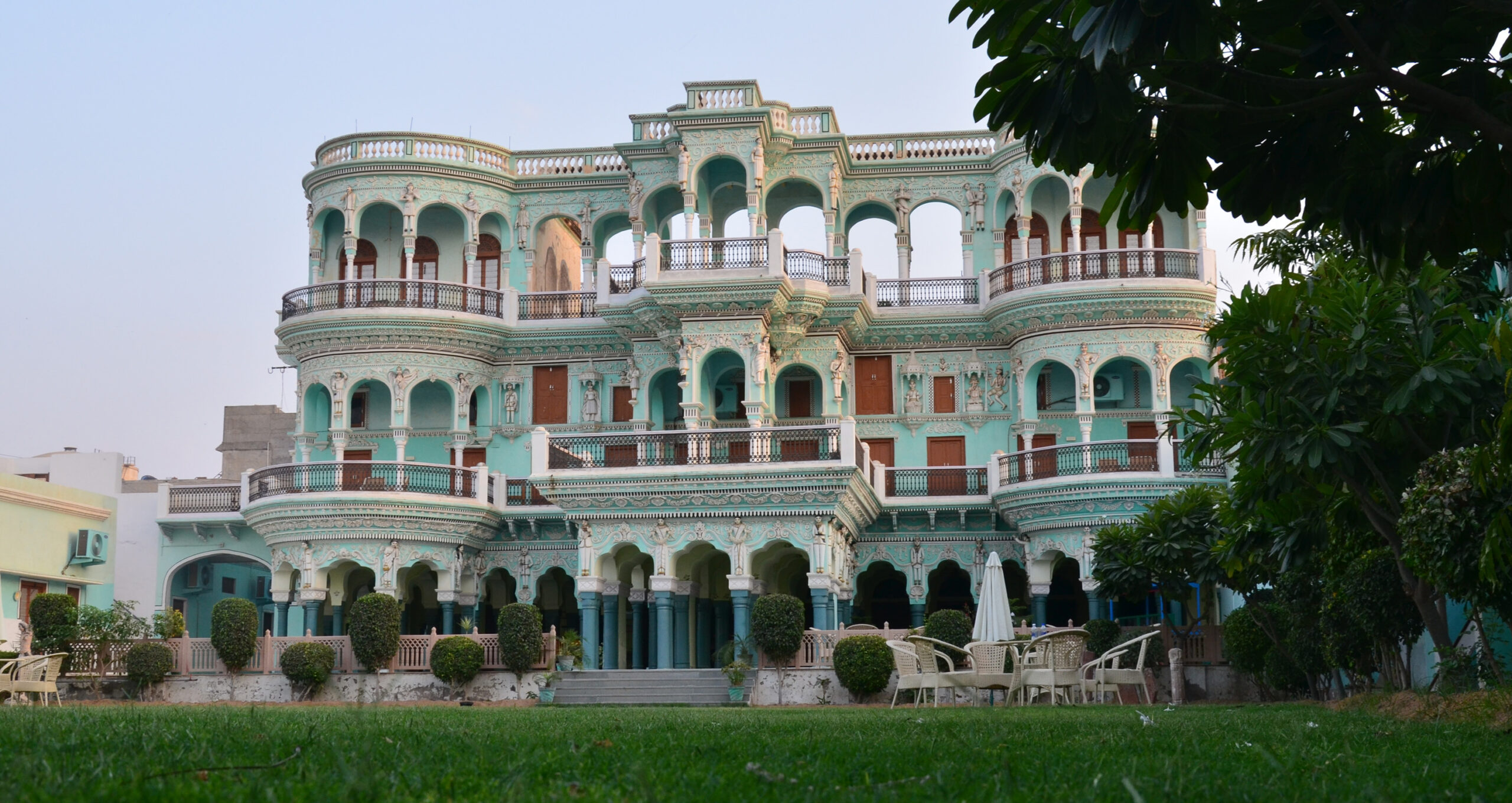
Raised in the 1920s in the heart of Churu, painted the colour of new leaves and covered wall to ceiling in frescoes. Twenty rooms, one family, and a hundred years of the same address.
Our History
The man, the Maharajaand the house between them
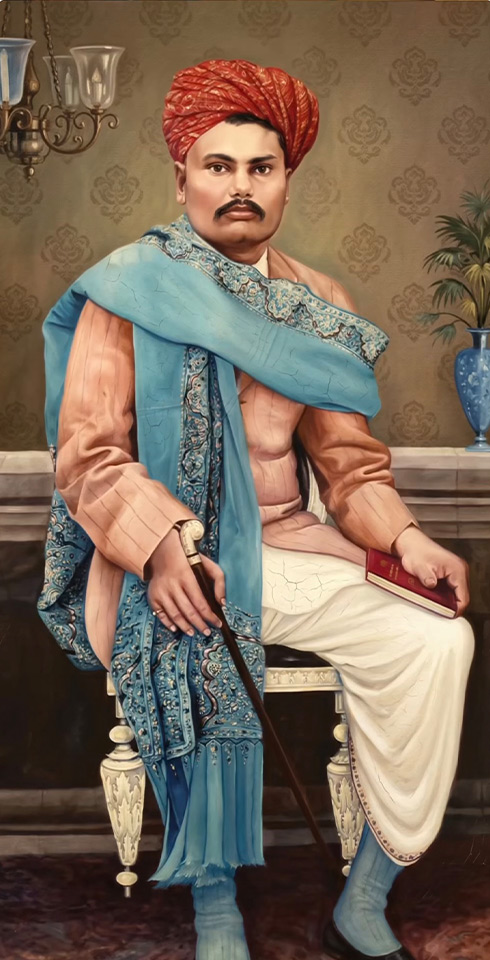
Malji Kothari
A Churu merchant with an appetite for ornament. In the 1920s he raised three storeys of arches, cherubs and dancing figures in painted plaster, and called the whole thing simply his kamra — his room. The name outlasted him.
Malji KothariThe builder
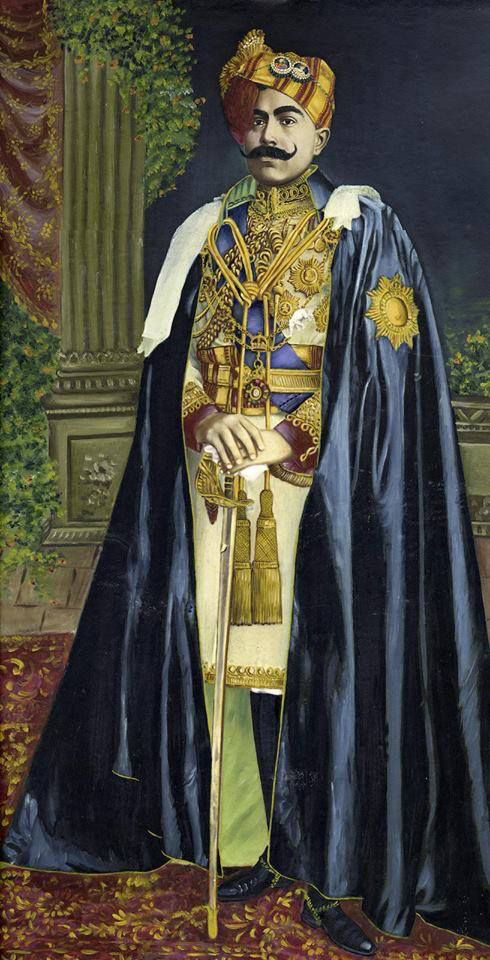
Maharaja Ganga SinghBikaner, 1880–1943
Maharaja Ganga Singh
Ruler of Bikaner, the state Churu then belonged to. On his journeys through this stretch of the Thar the house received him as a royal guest — which is how a merchant's private folly came to keep a king.
The house is a genuine oddity. Italianate plasterwork sits beside Shekhawati fresco; cherubs share a wall with dancing figures; a painted steam train runs across one ceiling. Nothing about it is restrained, and nothing about it is copied from anywhere else.
Its restoration took twenty years, done deliberately slowly by local artisans working in lime plaster and mineral pigment. Original pillars, cornices and murals were kept wherever they had survived. Where they had not, we left the gap rather than invent something.
Did you know?
The house has been written about and photographed by National Geographic, Outlook Traveller, The Indian Express and The Hindu.
Guest Reviews
Judged by the peoplewho actually stayed
4.7
137 reviews · #1 of 5 hotels in Churu
4.4
Rated across hundreds of guest reviews
Experiences
Churu doesn't perform.Come anyway.
Rooms
Two kinds of room,both a century old
Category One
The Heritage Room
The painted ones. Original murals run across every wall and up into the ceiling — floral panels, Italianate borders, and in one room a steam train. Rosewood four-posters, patterned stone floors, and a bathroom entirely of this century.
Category Two
The Haveli Room
Quieter and larger. Take a balcony over the courtyard or step straight onto the lawn from the ground floor. Handmade king beds, restrained decoration, and the particular silence that only an old house in a desert town manages at night.
In-House Dining
Everything you needis already inside
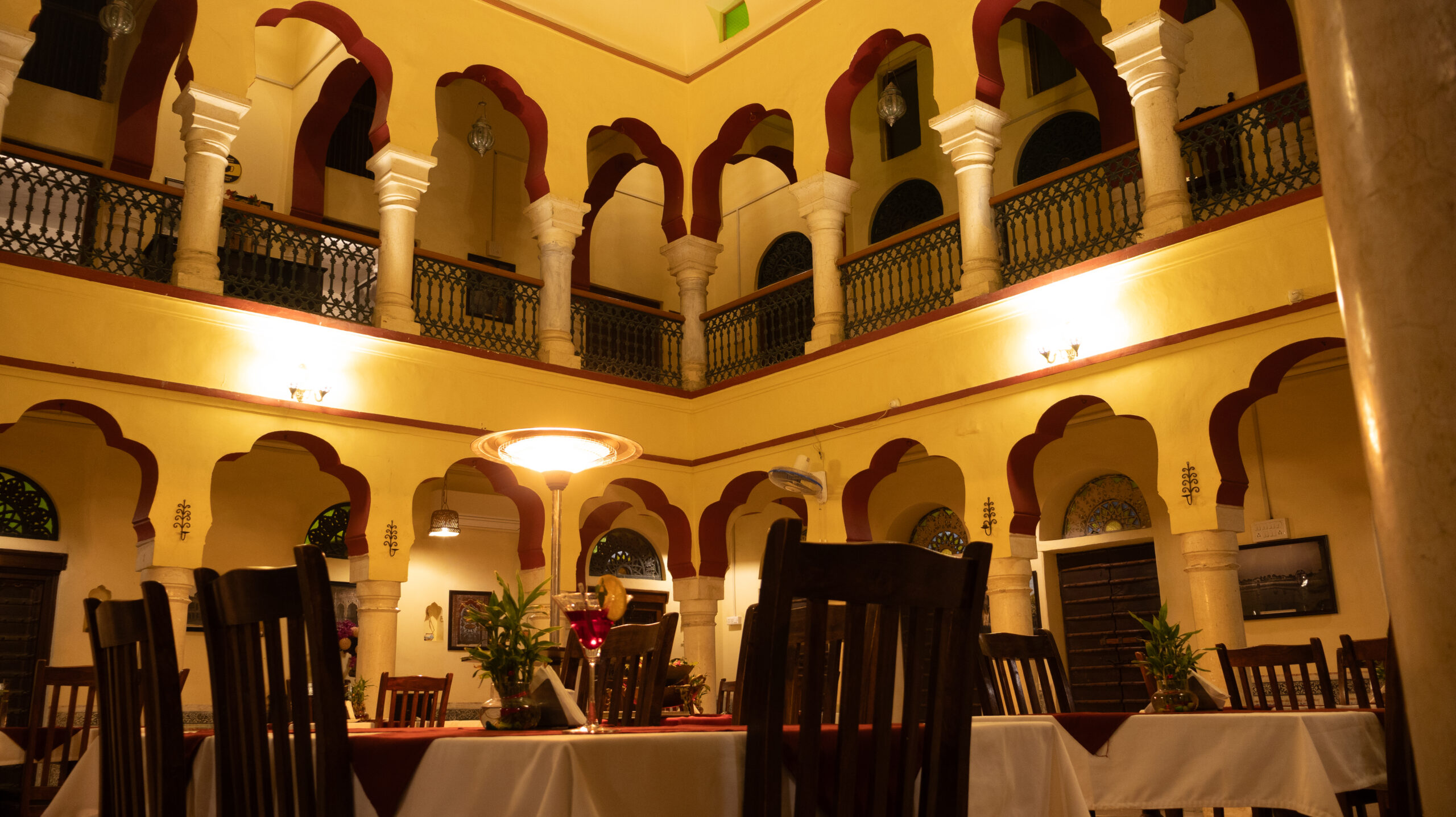
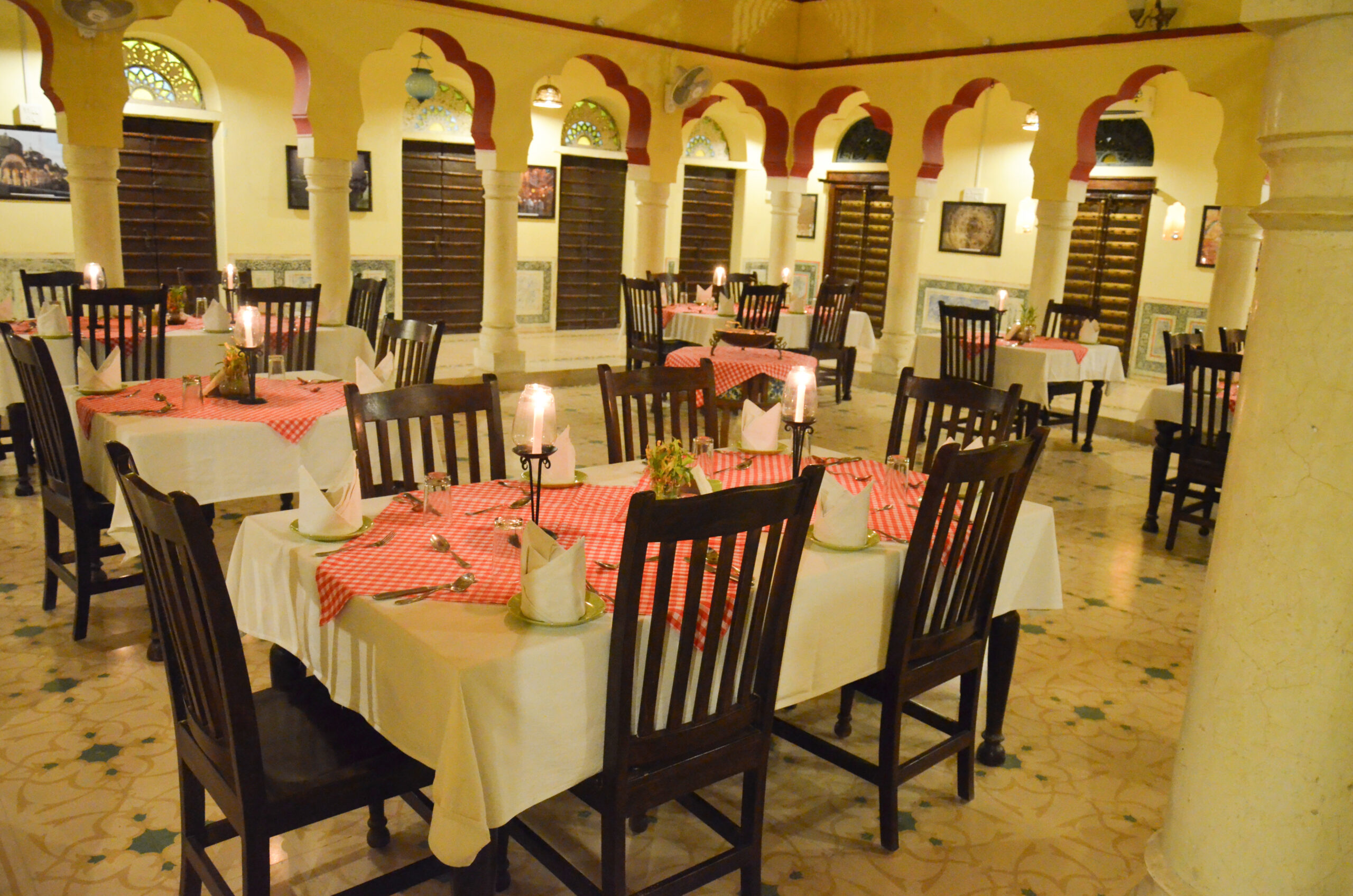
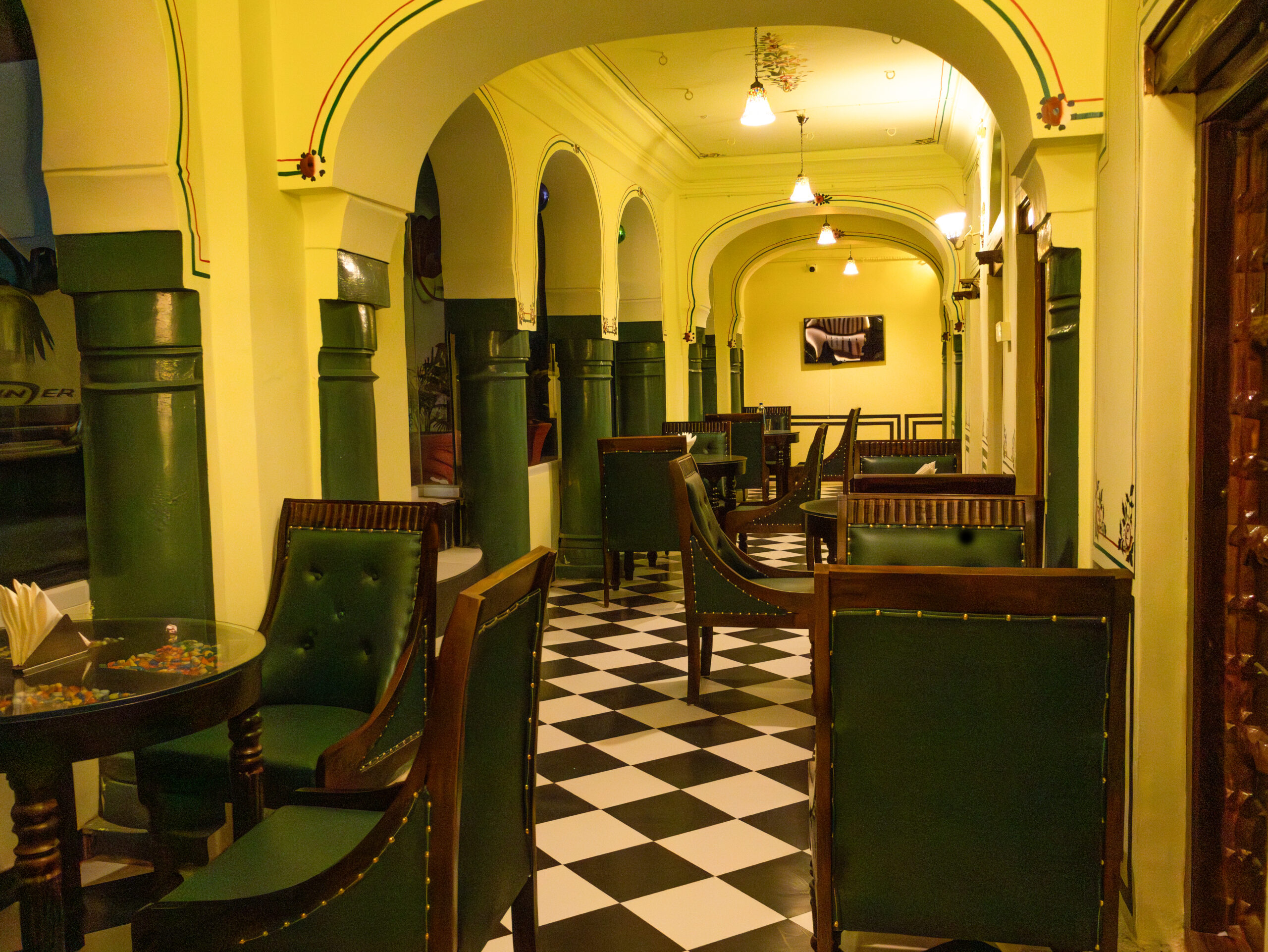
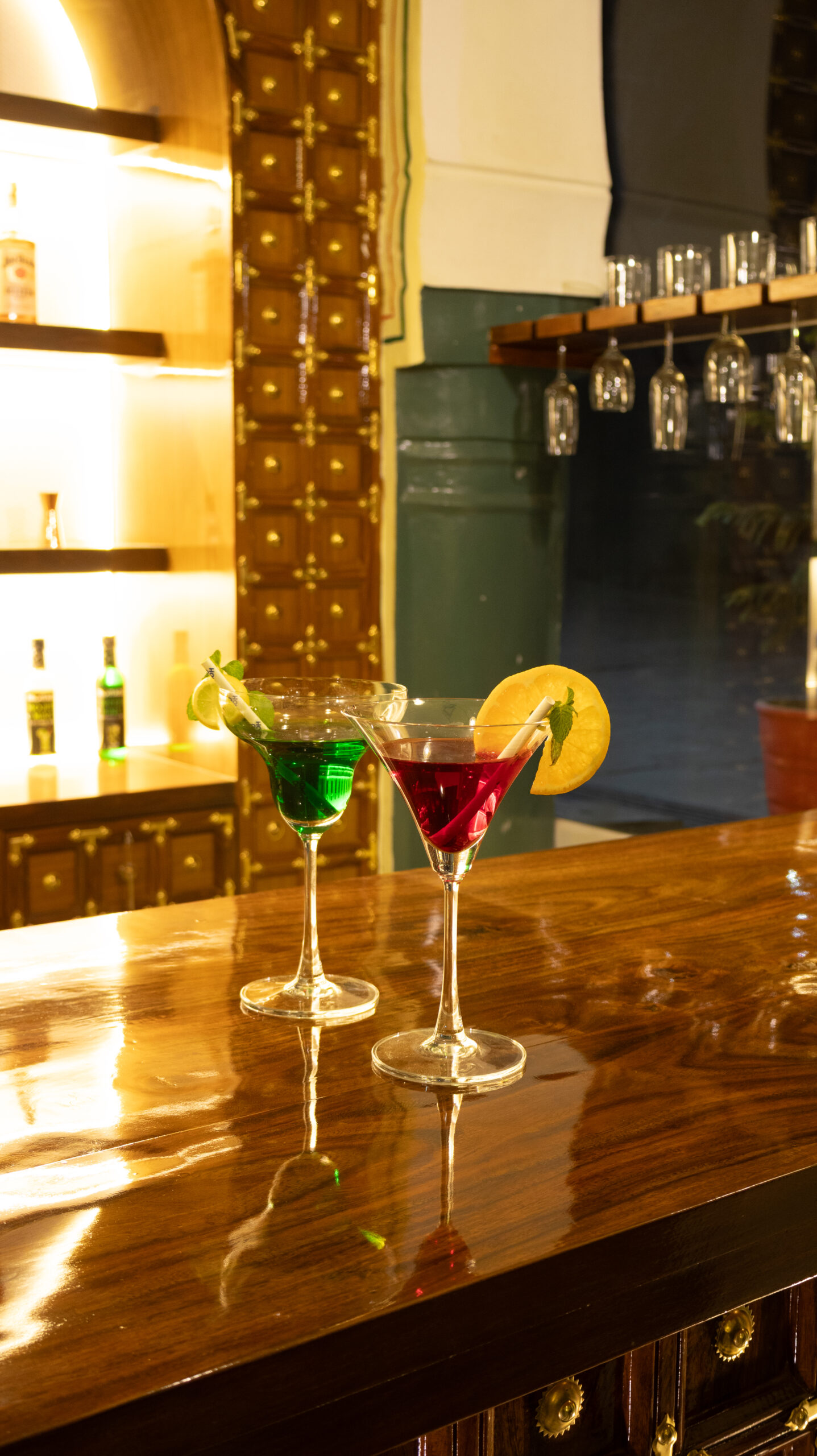
A restaurant on the ground floor and a bar built into carved wood. Shekhawati cooking is quieter than the Rajputana food you have eaten elsewhere — less chilli, more restraint, and almost entirely vegetarian.
The RestaurantSpice Court
Indian and Rajasthani cooking, served on the ground floor from breakfast through dinner.
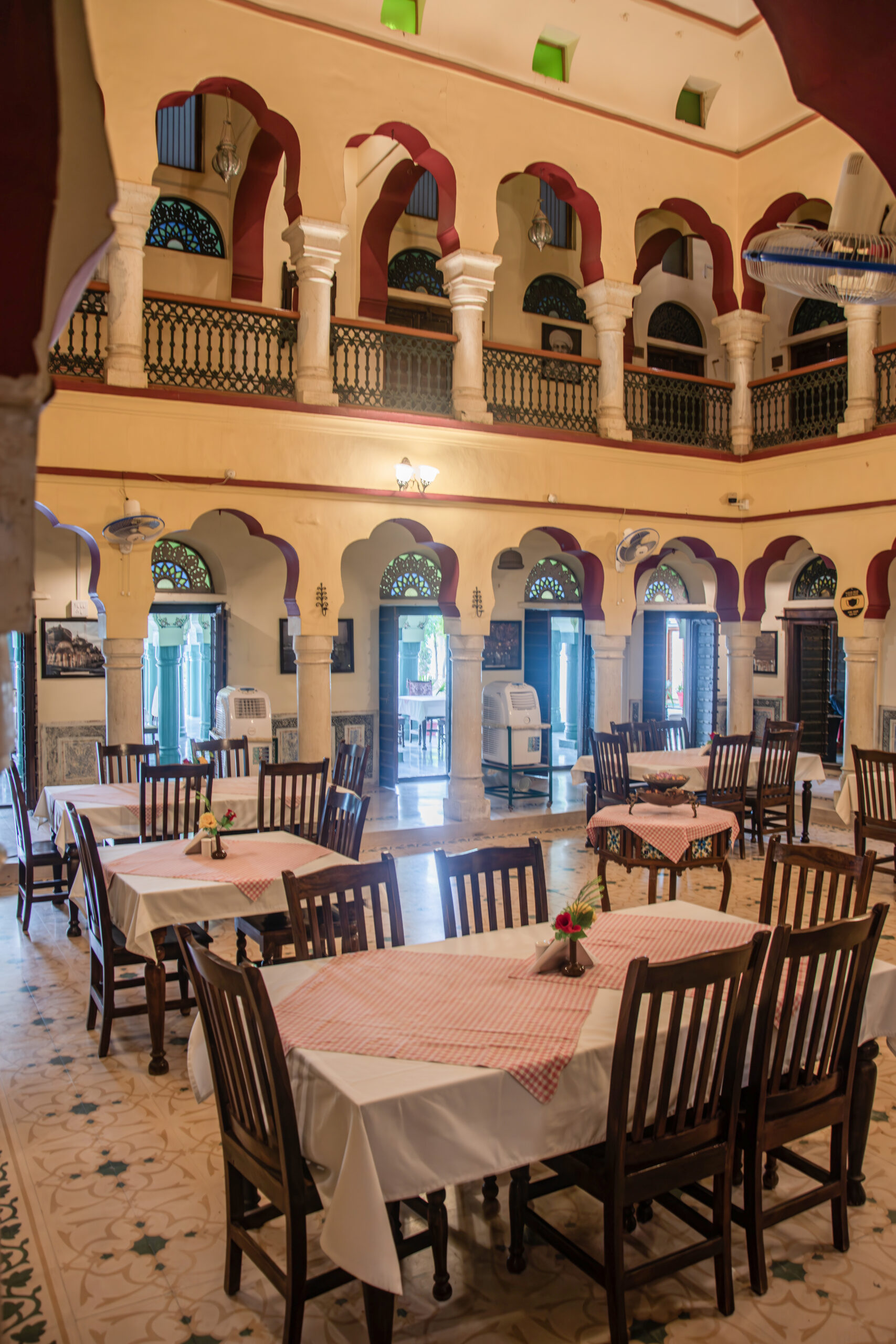
Breakfast to dinnerThe Dining Room
Arched, lamplit and laid for the evening, under the balconies of the inner court.
Purely vegetarianThe Table
Shekhawati cooking built on what the desert gives, prepared by the family's own kitchen.
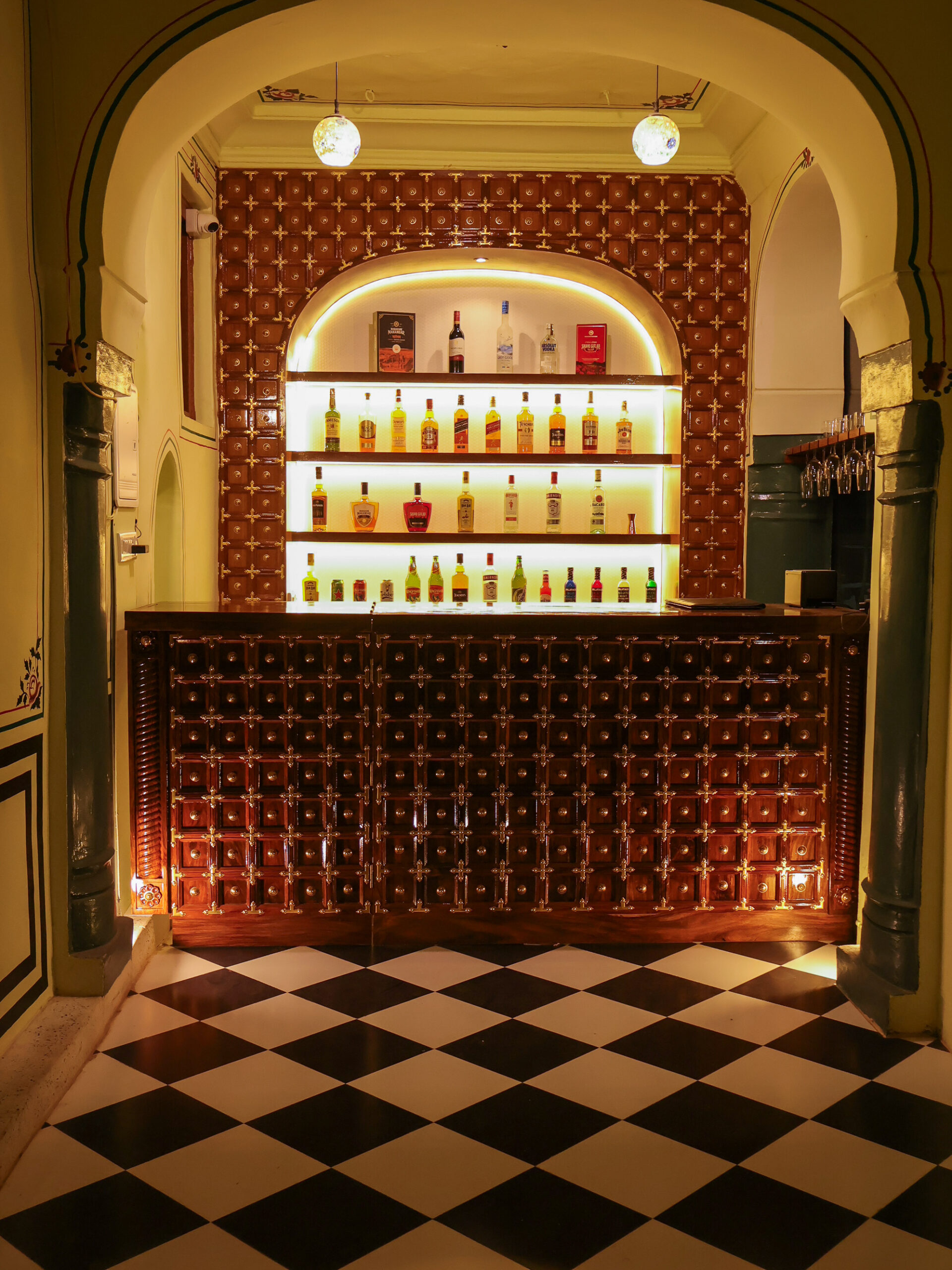
The BarCarved Wood & Low Light
Single malts, wine and an unhurried pour once the sun goes down over the courtyard.
Chequered floorThe Counter
Lit shelves set into the wall, and a bartender with opinions worth asking for.
EveningsAfter Dark
The house quietens, the lamps come on, and the courtyard belongs to whoever is still up.
Twenty rooms, wide lawns and a courtyard that seats a hundred — enough to close the property for a single group. We host offsites, board retreats, incentive travel, film and photography units, weddings and family gatherings.
Exclusive use of the property for up to 40 guests
Lawn, courtyard and rooftop venues for dining and sessions
Team experiences built from our desert and heritage programme
Full in-house catering, purely vegetarian or on request
Six hours from Delhi, three from Jaipur, station one kilometre away
We answer every enquiry ourselves, usually within a few hours. The more you tell us, the better the stay we can put together — and yes, we will plan the whole itinerary before you arrive.
Churu sits on the Delhi–Bikaner line, with daily trains and a station a kilometre from our gate. By road it is roughly six hours from Delhi and three from Jaipur.
Our ConciergeUsually replies within minutes
Namaste. How may we help you plan your stay at the haveli?

 4.7
4.7

 4.4
4.4